Lecture 02 · IMO · CCMUN 2026 · ~16 min
Maritime Strategies & Delegate Preparation
From Analysis to Action
Protecting Vulnerable Coastal Communities Through Maritime Policy
Learning Objectives
- Propose maritime adaptation strategies for coastal community protection
- Compare bloc positions across East and West on climate displacement responses
- Analyze the effectiveness of hard infrastructure versus nature-based solutions
- Evaluate the role of international cooperation frameworks in addressing displacement
- Formulate research strategies for effective delegate preparation
- Develop debate arguments aligned with your country's position
Introduction · Why This Matters
From Problem to Policy
"How can IMO and the international community protect the most vulnerable coastal populations?"
— Core Question, Lecture 02
In Lecture 01, we established the scale of climate-induced displacement: millions of people across Southeast Asia, Africa, the Pacific Islands, and the Americas face escalating threats from rising seas, intensifying storms, and coastal erosion. We mapped the IMO's mandate and explored why maritime governance is central to this crisis.
Now the question becomes urgent: How do we translate awareness into concrete action?
Three Pillars of This Lecture:
1. Maritime adaptation — the infrastructure and ecological strategies that protect coastlines
2. International cooperation — the political frameworks that mobilize resources and coordination
3. Effective representation — how you, as a delegate, translate your country's position into committee action
This lecture bridges the gap between understanding the problem and preparing to act on it. By the end, you will have the analytical tools to position your country, formulate arguments, and engage meaningfully in committee debate.
Adaptation · Infrastructure & Nature
From Seawalls to Mangroves
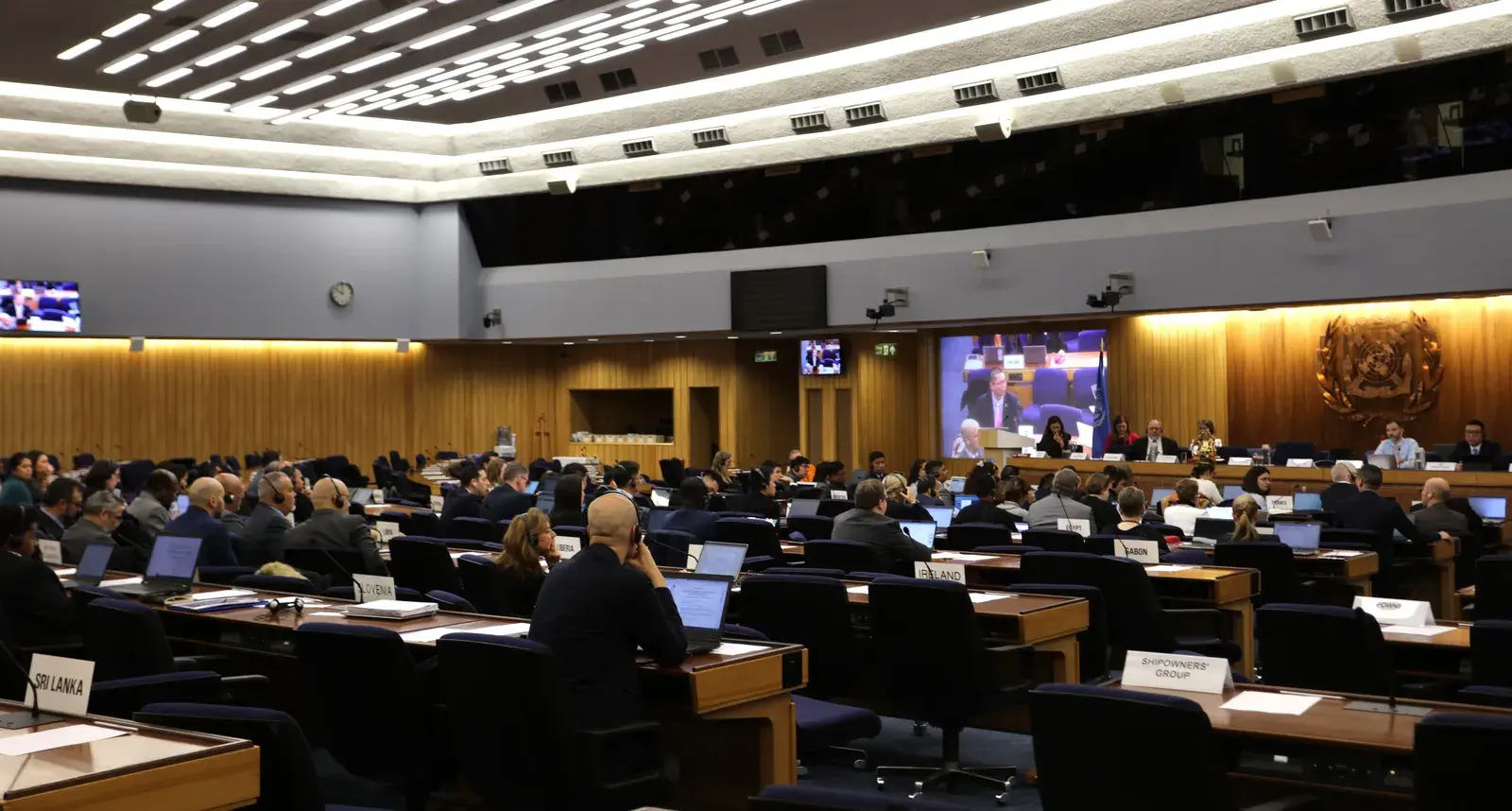
IMO delegates in session at the Joint ILO/IMO Tripartite Working Group, London, February 2024. The IMO's 176 Member States deliberate on shipping safety, environmental protection, and increasingly, climate adaptation. (Credit: International Maritime Organization, CC BY 2.0)
Maritime Adaptation
Maritime adaptation refers to the range of strategies — engineered and ecological — that societies deploy to protect coastal populations, infrastructure, and livelihoods from climate-related sea-level rise, storm surge, and coastal erosion. The choice of approach carries profound implications for cost, timeline, ecological health, and long-term resilience.
Hard Infrastructure
Engineered structures designed to physically block or redirect ocean forces.
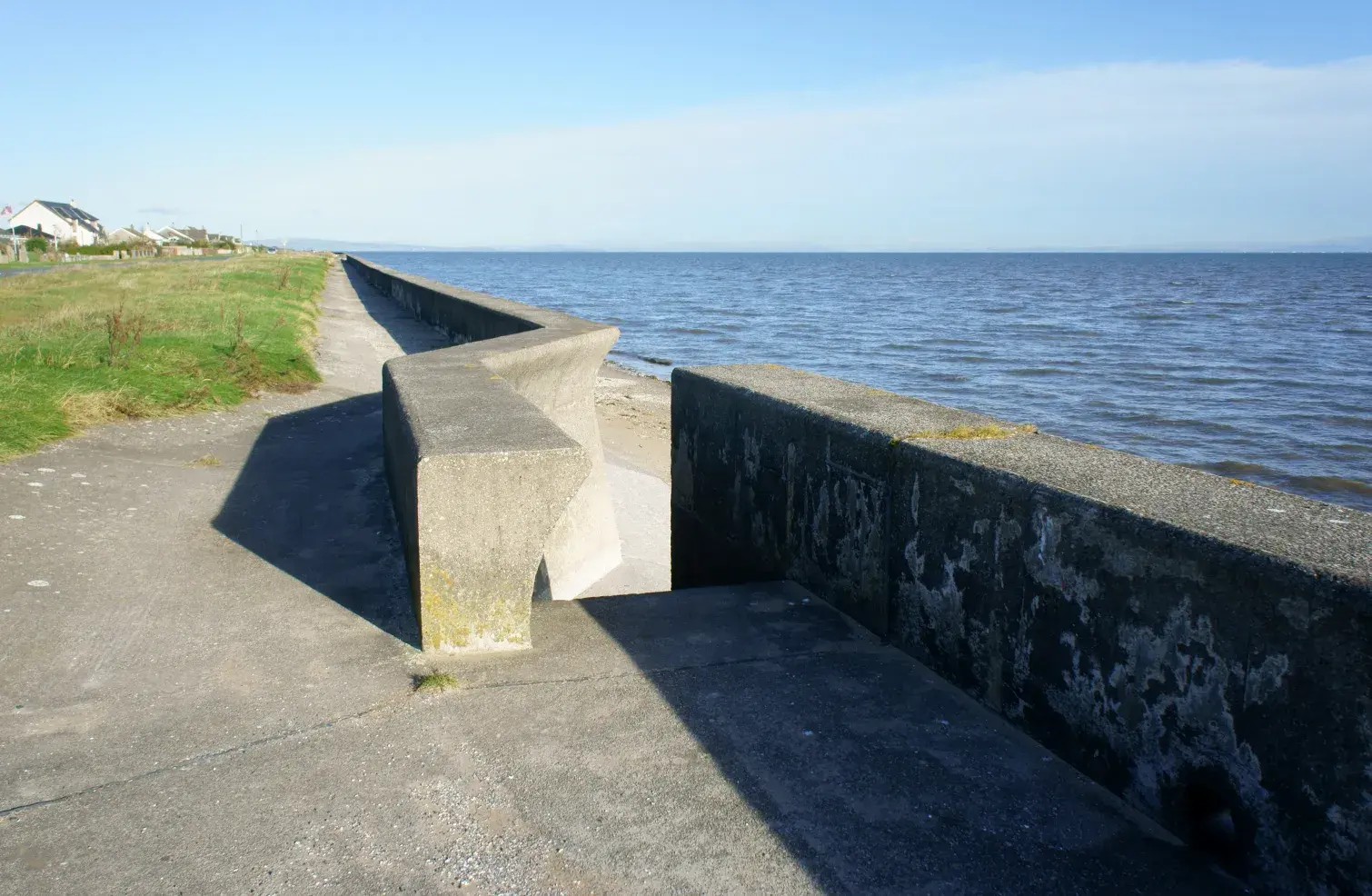
Seawall providing coastal defence against erosion and storm surge. Hard engineering structures like this remain the most common adaptation in developed coastal zones, though they come with high costs and ecological trade-offs. (Credit: Stephen Middlemiss, CC BY-SA 2.0)
- Seawalls, breakwaters, storm surge barriers
- Thames Barrier (London) — 9 steel gates, protects 1.2M people
- Delta Works (Netherlands) — one of the 7 modern engineering wonders
- Tokyo floodwall — underground cathedral of flood control
Pros: Immediate protection; proven technology; scalable for urban coastlines
Cons: Extremely expensive (billions per project); ecological disruption; ongoing maintenance burden; may create false sense of security
Nature-Based Solutions
Ecological approaches that harness natural systems to absorb and buffer coastal threats.
- Mangrove restoration — natural storm surge buffers, nursery habitats
- Coral reef conservation — wave energy reduction by up to 97%
- Dune rehabilitation — sand dune systems as natural barriers
- Mekong Delta — largest mangrove restoration program globally
- Great Green Wall (Africa) — 8,000 km ecological restoration corridor
Pros: Cost-effective; carbon sequestration; biodiversity co-benefits; community employment; self-maintaining
Cons: Time to establish (5–15 years); less effective for extreme events; climate-dependent (reefs bleach, mangroves need sediment)
Key Insight: The most effective adaptation strategies integrate both approaches — hybrid solutions that combine engineered defenses with restored natural systems. The challenge is not technical but financial and political: Who pays?
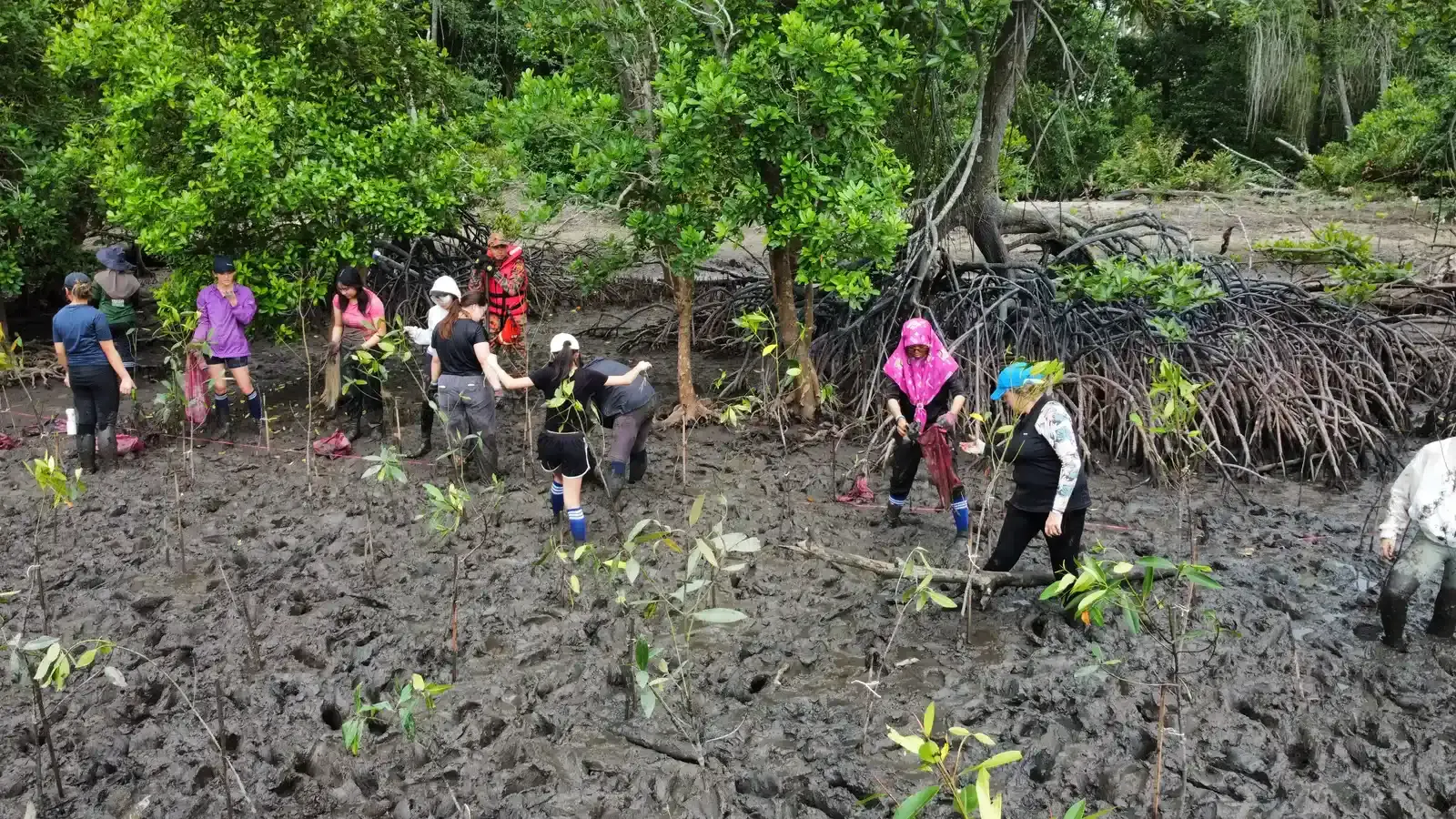
Mangrove planting restoration in Changkat Keruing, Malaysia. Mangroves serve as natural coastal defences, absorbing up to 80% of wave energy and sequestering up to 4x more carbon than tropical rainforests. (Credit: KUASACSR, CC BY-SA 4.0)
Preparation · Research Questions
Preparing for Committee: Key Research Questions
Before entering the IMO committee, you must research your assigned country thoroughly. The following eight questions will guide your preparation and help you build a compelling, evidence-based position:
1. Is your country significantly exposed to climate-induced displacement?
Identify your country's coastline length, population density in coastal zones, and exposure index (e.g., ND-GAIN Country Index). A country with 70% of its population living below 10 meters elevation faces fundamentally different stakes than one with inland geography.
2. What specific threats do your coastal regions face?
Sea-level rise is not uniform. Some regions face storm surge amplification; others face saltwater intrusion into freshwater aquifers; still others face permanent inundation. Research which threat is primary for your country's coast.
3. Has your country implemented prevention or adaptation measures?
Document existing infrastructure — seawalls, mangrove programs, building codes, early-warning systems. Understanding what already exists is essential for proposing what comes next.
4. Is there a relocation plan for vulnerable coastal populations?
Some countries have begun managed retreat programs (e.g., Fiji's village relocation initiative, Indonesia's planned capital relocation). Others have no formal plan. Identify which category your country falls into.
5. What is the state of climate-resilient housing and infrastructure?
Examine building standards, zoning regulations, and insurance mechanisms for coastal properties. Many developing nations lack enforceable coastal construction codes.
6. How is funding allocated for coastal protection in your country?
Track domestic budgets, international aid flows, and private investment. Identify whether your country is a net recipient or contributor to adaptation finance.
7. How does your country balance economic development with ecosystem protection?
Many coastal nations face tension between port development, tourism infrastructure, and ecological conservation. Where does your country's policy land on this spectrum?
8. What cultural preservation policies exist for at-risk coastal communities?
Coastal communities often hold intangible cultural heritage — fishing traditions, oral histories, sacred sites. Research whether your country has policies protecting these assets during relocation or adaptation.
Debate · Guided Points
Guided Debate: Points You Must Address
When you enter committee, these five contested questions will shape the discourse. Your ability to articulate a clear position on each will determine your influence in negotiations.
1. Defining Climate Displacement
Should IMO take a position, or does it fall under UNFCCC/UNHCR?
The IMO's mandate centers on maritime safety, security, and environmental protection. Climate displacement intersects with multiple UN bodies. As a delegate, you must argue whether IMO should claim jurisdiction over maritime climate displacement or defer to existing frameworks. Your answer shapes the committee's entire approach.
2. Infrastructure vs. Nature
Which approach should receive priority funding through IMO?
Hard infrastructure offers immediate protection but costs billions. Nature-based solutions are cheaper and generate co-benefits but take years to mature. As a delegate, you must argue for a funding priority — or propose a hybrid model that satisfies both camps.
3. Cultural Heritage
Should IMO mandate cultural impact assessments for coastal projects?
Relocation and adaptation projects often destroy the cultural fabric of coastal communities. Should IMO require cultural impact assessments alongside environmental ones? This question tests whether the committee values human heritage alongside engineering solutions.
4. Legal Framework
Should a new protocol be created under IMO for climate-displaced maritime communities?
Some delegations — particularly Pacific SIDS — advocate for a binding legal instrument recognizing climate-displaced persons as a protected category under international maritime law. Others argue this overextends IMO's mandate. This is the most consequential structural question in the committee.
5. North-South Cooperation
How do we structure technology transfer and funding mechanisms?
Eastern blocs demand unconditional grants and debt relief. Western blocs prefer conditional financing and technology licensing. As a delegate, you must propose a mechanism that bridges this divide — or align with one side and defend your choice.
Reflection · Final Thoughts
Final Thoughts: Becoming an Effective Delegate
Effective representation in the IMO committee requires more than knowledge. It demands strategic thinking, negotiation skill, and the ability to translate your country's position into actionable proposals.
Four Pillars of Effective Representation
- Knowledge of your country's specific vulnerabilities — not generic climate facts, but the precise coastal threats, population exposure, and existing adaptation capacity of your assigned nation.
- Understanding of IMO mandate boundaries — knowing what the committee can and cannot do, and how to work within those limits to achieve real outcomes.
- Ability to propose concrete, actionable solutions — not just identifying problems, but drafting resolutions, suggesting funding mechanisms, and offering technical expertise.
- Willingness to cooperate across blocs — the most effective delegates build coalitions. Find common ground with opponents and negotiate from a position of mutual interest.
Reflection Questions
- [Comprehension] What are the two categories of maritime adaptation, and what are their trade-offs?
- [Analysis] Why do Eastern and Western blocs approach climate displacement differently?
- [Evaluation] Which bloc's position is most aligned with IMO's mandate, and why?
- [Application] Draft a one-minute opening statement for your country on maritime adaptation.
Extension Reading
- IMO (2024). Strategic Plan for the Organization for the Period 2024–2029
- UNFCCC. Warsaw International Mechanism for Loss and Damage
- IPCC (2023). AR6 Synthesis Report: Climate Change 2023
— End of Lecture 02 —
Thank you for completing the CCMUN 2026 IMO Delegate Training. Good luck in committee!